
Miss Hale
by Paul Harding
The town of Enon, where I grew up and to which I still frequently return to visit my mother, is located four miles inland from the sea. On foggy or stormy days, when the wind blows in from the coast, you can smell salt in the air. The name means “watery place” in Old English. The western part of the town is old farmland reclaimed by the woods. Miles of stone fences, some three, nearly four centuries old, run through the forest, marking the boundaries of long-vanished fields. The northern part of the town is a swamp. The eastern part of the town is a forest which has, so far as any of the town historians knows, never been disturbed, except by the campus of a small seminary set on the top of a cleared hill in the middle of the wilderness. The southern part of the town is bounded by a narrow, deep, slow-moving river that floods every spring, forming seasonal islands populated by large, prehistoric-looking birds, and making it possible for canoeists to paddle for miles through the surrounding forests.
When I was a boy, there were no more than half a dozen roads running through the town, Main Street being a section of the old post road to Boston. Now these roads have other roads leading off them, and most of the land has been cut up into expensive one-acre parcels, upon which sit elaborate and costly homes occupied by people who pay outlandish sums to live in authentic old New England. When I was very young, though, I remember almost all of the houses of the town being white with black or very dark green or very dark blue shutters. The rooms inside these houses had wide-planked pine floors, sometimes accented by a cable rug, and were sparsely furnished with spindly wooden chairs and impractical colonial appliances such as spinning wheels or butter churns. Their walls were covered with wallpaper depicting pastoral scenes or flowers that looked as if they had been drawn with a quill in rose or china-blue colored India ink. I’m sure there were curtains, but my memory is of tall, unobscured windows, bare except for an occasional blue or amber or green antique bottle set on the top of the bottom sash. The rooms were clean and bare and cold and smelled pleasantly of damp plaster. There always seemed to be an old woman, too, sitting in a chair with a back issue of a magazine about antique porcelain on her lap, asking if I wanted some milk and cookies, neither of which I did (because the milk was likely to be buttermilk and certain to be warm, and the cookies some bizarre, apparently sugarless species flavored with amaretto or aniseed, which I felt as if I could still taste a week later), but both of which I accepted and dutifully consumed.
The old woman I remember most vividly was Miss Hale. She did not read old issues of antiques magazines, though, because she was legally blind and wore glasses as thick as lighthouse lenses, which magnified her eyes to twice their real size. But, rather than broadcast light, like a lighthouse lamp, they seemed to draw up whatever light there was in the room and funnel it into Miss Hale’s eyes. This made her eyes look even bigger. She found the term “legally blind” ridiculous and, even though she used it to describe her condition, she did so in a tone of contempt, saying it was only useful to convey that she was not permitted to drive a car, which is to say, useless, because she had never had a license and found cars absurd to the point of obscenity—this, at least, according to my grandmother. The only time Miss Hale spoke of cars to me was when she mentioned the chrome on their fenders while telling me the story of the time when, in the summer of 1910, she had taken her sick sister to Salem on horseback.
Miss Hale’s family had lived in the town since the late seventeenth century and it seemed to me that she herself was less an individual than a summary of that history concentrated and projected into a chair into the form of the little person who sat in front of me. The afternoon light coming through the windows and the clean smell of plaster always made me sleepy, and what I most wanted when I visited Miss Hale was to lie down on the floor in a patch of sun and sleep until dusk when, on waking, I’d find the room empty and almost dark and quiet, except for the soft ticking of the French carriage clock on the secretary. Instead, I read to her.
Miss Hale kept her glasses on a silver chain around her neck and put them on whenever there was company, even when I first began to read to her and all she had to do was close her eyes and listen and smoke her cigarettes. Later, when she must have thought I was engrossed enough in our book not to notice, she would take them off. Even then, though, she would rest her elbows on the arms of her chair and hold the glasses at the hinges of their temples, as if she had only removed them for a moment to close her eyes and concentrate on an especially poetic image or an especially well-turned sentiment I’d just read from the book, and would put them back on the next moment, when she had decided what she thought. In fact, the first time she did this I stopped reading, not sure whether she needed a moment to ponder or was about to speak. She opened her eyes, put her glasses back on, and looked in my direction. The light falling on the open book I was reading seemed to swell up off the page and arch towards those powerful lenses.
“Is something wrong?” she asked.
I said, “No, I thought that you might—”
“No, please continue,” she said. I was embarrassed and could tell that she was, too. She kept her glasses on, if not her eyes open, for the rest of that afternoon’s reading.
My grandmother enlisted me to read to Miss Hale. My grandmother worked as a clerk in the village post office and considered herself an expert on the moral worth of almost all of Enon’s residents. She thought that Miss Hale was of the finest colonial stock—modest, thrifty, and sober. As for Miss Hale’s piety, my grandmother had no opinion beyond remarking that there’d never been a Sunday during which Miss Hale could not be found sitting in the back row of the First Congregational Church of Enon. This information was not to be relied upon, however, since my grandmother and grandfather had become Unitarians ten years before I began reading to Miss Hale, and besides, my grandmother’s religious sensibilities consisted of a private pair of truths: namely, that the Bible was beautiful literature, and that she’d seen the light, felt the heat, and walked the sawdust path when she was a girl, but that only had been to get the boys’ attention on a Friday night, when there was nothing better to do in the village she’d grown up in in northern Maine. “That pie-in-the-sky bye and bye is for the damn birds,” she’d say, to which my grandfather, half-dozing on the couch, would invariably add with a groan, “Oh! What a lot of happy horse shit.”
Miss Hale was blameless in any case, and my grandmother was impressed with the fact that there were any number of houses in the town with plaques stating that they had been built by and lived in by this or that Hale in 1645 or 1712 or 1803. Miss Hale herself lived in the last home to have been built by one of the men in her family. Her grandfather, Nathan Hale, had constructed the ten-room colonial, located in the middle of the village, on an acre and a half of pasturage owned by his father, Isaiah Hale, which the elder man bequeathed to his son and bride, Rebecca, upon their marriage in 1866. The couple had put off the wedding while Nathan fought in the Civil War (which Miss Hale always called the War of the Union). After Nathan and Rebecca had passed on from the world, their son, Miss Hale’s father, Jonathan Cloverdale Hale, the only surviving child of a brood of six (his brothers and sisters having been taken by, respectively, fever, tetanus, vomiting, earache, and a two-hundred-pound block of ice), came into the house, to which he brought his wife, Emily, Miss Hale’s mother.
Miss Hale and her twin sister had been born in one of the upstairs bedrooms in the middle of a heat wave in August 1895. The twins were, for whatever reason, Jonathan and Emily’s only children. Neither girl had ever married and both lived in the house their entire lives. Miss Hale’s mother died of a wasting disease in 1904, leaving the girls to take care of their father. Their father drowned five years later, leaving the two of them, then aged thirteen, in the house alone. I have looked at the minutes of the town meeting for June 1909, in which the matter of the twins and whose care they will be given over to is discussed. After some brief remarks, made by Roger Cuthbert, about the traditional obligations of a town to see to the care of its orphans, Miss Hale and her sister were permitted to ask that they be left to their own devices under the charitable and avuncular eye of the Congregational minister, Daniel Perkins. The minutes read, “After the girls’ clear headed and able speech, during which they took turns making their well-rehearsed points, the one standing a step in front of the other, hands clasped in front of her, her head held high, her gaze direct, the other standing behind her sister, hands similarly clasped, but with her head bowed, the Town was convinced that these really were the daughters, no longer of this or that man, but of Enon itself,” and it was resolved five to two to allow them to continue to keep house on their own, together in their ancestral home.
A year later, in August 1910, Miss Hale’s sister took sick at a time when Enon’s physician, Dr. Bell, was himself struck down by an illness that was to prove fatal. Influenza had gripped the town and Dr. Bell had contracted it after overseeing the care of several other residents who succumbed to the disease, including the Hale girls’ nominal uncle, the Reverend Perkins. The young pastor from the seminary called in to take Reverend Perkins’s place immediately announced a fast and several days of prayer and introspection in an attempt to discern what sins the people of Enon had committed to bring such a scourge upon themselves. This was when Miss Hale had borrowed a horse from the blacksmith shop and ridden with her ill sister ten miles through a thunder and lightning storm to get to the doctor in Salem. Her sister died somewhere along the way.
Miss Hale lived alone. The only other person I ever saw there was the woman who cleaned house for her, a cheery, heavy-set girl named Pammy, who was a student at the women’s college two towns over. Girls from this school, which gave degrees in either nursing or teaching, could often be found lugging buckets of soapy water from room to room in the larger houses of Enon, where they were taken on as housekeepers, or serving tea to Enon’s old ladies at the Tea House. Pammy had gone to Enon High School and had been my tennis instructor during summer camp for three years. I had been very much in love with her during those summers. I hadn’t seen her for several years and, when I first saw her again at Miss Hale’s, I immediately found myself very much in lust with her, much to my dismay. I think I was reading Miss Hale The Deerslayer when Pammy poked her head into the parlor one afternoon. “Hiya, Miss Hale,” she said, and when she saw me she added, “Hiya, kiddo.”
Her hair was pulled up into a ponytail and she wore a pair of ripped jeans and a navy blue pullover sweatshirt with the name of the college in white across the front. Pammy did not recognize me. That, and the fact that she called me “kiddo,” combined with my immediate, unbidden, and mercilessly vivid fantasy of being knotted up with her naked, fulsome body, put me into a sort of half-swoon, from which I barely managed to warble a “Hi, Pammy” in reply. She still didn’t recognize me, nor did she seem to register that my knowing her name might be odd.
“Hello, Ms. Greene,” Miss Hale said. “Do please clean the windows in the canopy bedroom. They’ve been besmirched by the swallows again.”
“Okey Dokey, Miss Hale,” Pammy said and disappeared from the doorway, the plastic bucket of soap and bleach and brushes and rags rattling against her leg, leaving behind a faint smell of ammonia mixed with floral perfume, which undid me further, as if it were a solvent and I a smudge of soil.
Miss Hale said, “Mr. Crosby, you were reading.” Avid and unhinged, I resumed relating the adventures of Natty Bumppo.
Miss Hale liked to smoke cigarettes. She kept a monogrammed silver box of them, with matching silver lighter, made in the shape of Aladdin’s lamp, on the coffee table in the parlor where we sat to read. Although I was not yet in high school, Miss Hale offered me a cigarette each time I read to her. “May I offer you a cigarette, Mr. Crosby?” she’d ask as she leaned over to help herself.
“No, thank you very much, Miss Hale,” I’d say. The first time she offered, I nearly took one, uncertain whether it would be worse to refuse her hospitality or to attempt smoking while trying to eat the cookies and drink the warm buttermilk she’d put out for me what must have been hours before I arrived. Smoking was common in those days, and so I’m sure not only that I smelled of cigarettes when I returned from her house to my grandparents’ across the street, but that no one in my family noticed, the smell of tobacco being a part of the general atmosphere. When I declined her offer, I imagined that Miss Hale made some sort of mental note, not exactly disapproving, but having something to do with my relative immaturity, as if my tastes were not yet as advanced as they might be ideally, or as if perhaps they never would be, coming as I did from a rather unremarkable family. She plucked a cigarette from the box and put it between her lips. She lifted the heavy lighter to the cigarette and lit it. After replacing the lighter on the table, she picked the loose bits of tobacco from the tip of her tongue and placed them in the crystal ashtray that she kept on the end table next to her chair. The afternoon sun coming through the west-facing window in the parlor lit the banks of blue smoke that surrounded her, dividing them into layers.
One afternoon, when I paused at the end of a chapter of A Man Without a Country, the two of us fell for a moment into a consensual silence. The French carriage clock ticked and something of the ambient roar of the planet could be felt humming between the walls and floor and ceiling. The shadows in the garden out beyond the windows were deepening, with just the tops of the flowers and the shrubs and the high grasses gilt by the sun. It was the time of afternoon when the world seems to accelerate and I felt as if I could practically see the shadows being hammered into wide, thin leaves on the lap of the lawn, and hear the narrow blades of light ringing as they dropped from the trees and window panes onto the far, unmowed back field and the pine planks beneath our feet. Pammy was upstairs somewhere, thumping around with the vacuum cleaner, which, it occurs to me, must actually have been making the hum I heard.
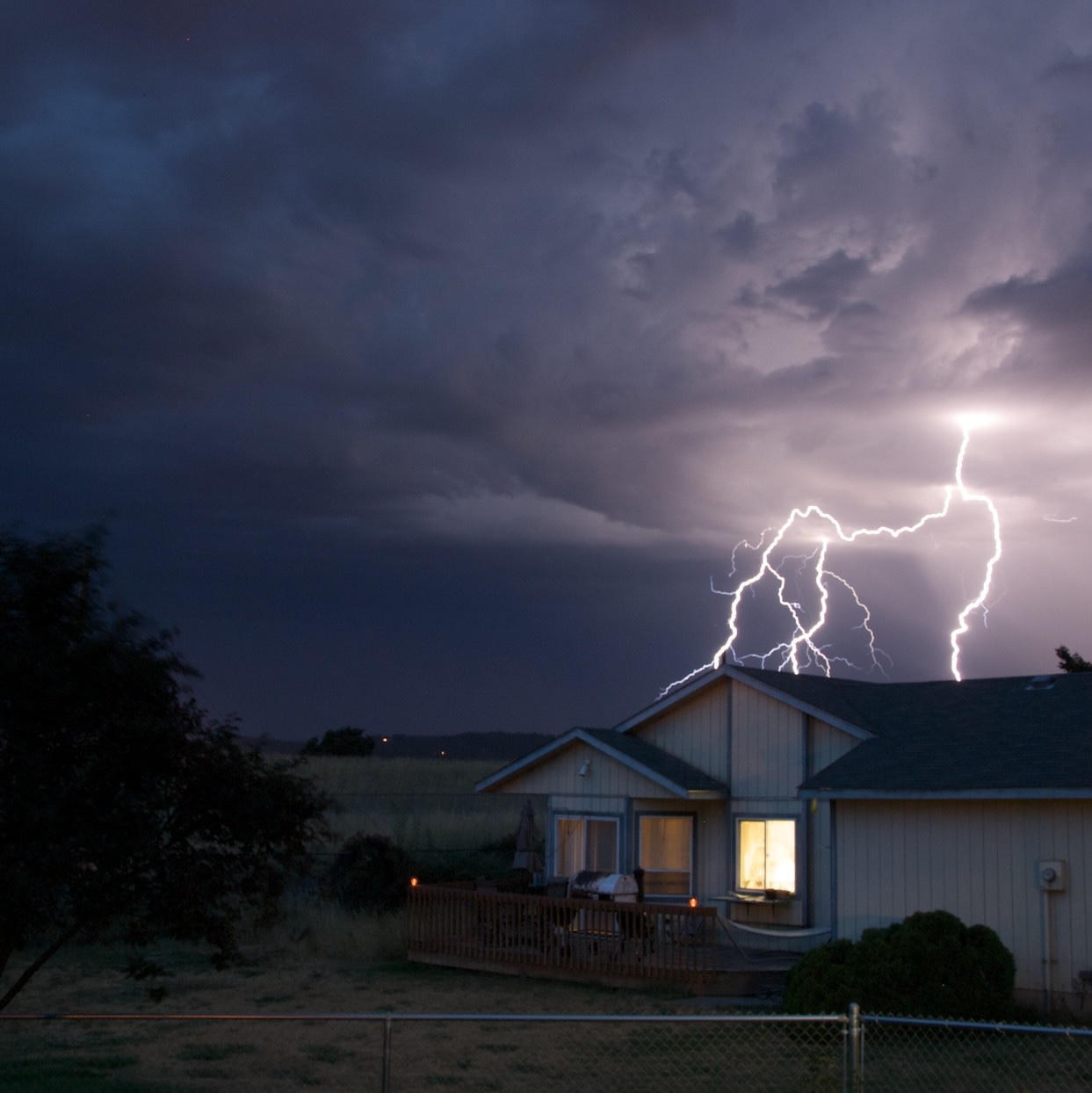
“I remember watching my sister from this window,” Miss Hale said. She had just lit a cigarette and exhaled smoke as she straightened herself in her chair. “She used to have a small plot of her own, just beyond that bank of high grass, by the stone wall, where she grew whatever flowers had taken her fancy each year. She used to cut the flowers and put them in glass bottles. Instead of large bouquets, she made small arrangements of just a few flowers each. She knew where to place them in the windows so that the bottles caught the light from the rising and setting sun, and every room seemed to have a lamp made from water and flowers. For some reason, I remember watching her pick zinnias from this window one afternoon. We were fraternal twins, but looked nearly identical, so it was as if I were watching myself. I have the sense that I was preoccupied, doing some chore or another; a thunderstorm was approaching and perhaps I was inside to close all of the windows. Our father had been terrified of thunder and lightning and, when he was alive, he made us close not only the windows but also sometimes the shutters at the first sign of a storm. His fear made him into quite a weatherman. He could tell a day ahead of time when and how strong it would storm, like a sailor. He would make my sister and me shut the house up tight on the hottest August afternoon, and stand in the doorway between the front parlor and the back hall, saying ‘It’s fine, girls; I’m sure it’s fine; there’s nothing to worry about; it’s fine girls; I’m sure it’s fine.’ We, on the other hand, loved thunderstorms, the more ferocious the better, and after our father had died we liked to wait as long as possible before closing the windows. Sometimes, we even allowed ourselves to keep the house open until the storm broke, screaming and laughing and running through the house when it did, half in a hurry to stop the rain from sweeping through rooms, half in a hurry to find the windows through which it was raining most in order to stand in front of them and shout ‘Dear Lord!’ and get a dousing. We’d go into the kitchen and towel our hair dry and laugh until we wept about how it would have frightened our poor dear father to death.”
This was the first time Miss Hale had ever spoken about herself or her family to me. Later, when I related the story to my grandmother, she said that she had never known any of it except that she knew Miss Hale had had a twin sister who died young. Miss Hale sat still, the smoke from her cigarette curling its way up her fingers and then unfurling off the back of her hand. I wished that Pammy would come downstairs, as she sometimes did, to ask Miss Hale whether a rug needed a beating or which order the china plates she’d just dusted went in the guest bedroom window (“I forget every time I take them down,” she’d say cheerfully. She clearly was not a very good housekeeper, and I had the sense that Miss Hale’s tolerance of her mediocre work and her occasional breaking of a figurine or old vase, was thought of by the old woman as a kind of charity). Sometimes, Pammy came into the room while we were reading to ask for a cigarette, which she did with no self-consciousness at all. I think she must have used her bucket of mop water for an ashtray. At any rate, Pammy did not come into the room, and Miss Hale continued her story.
“I remember seeing my sister out in the yard, picking zinnias and putting them into her basket. The trees behind her were lit up and there was a layer of clear sky above them like a river of light. There were storm clouds above the clear sky that were so black they were almost green. The first thunder detonated somewhere over Dodge’s field, much closer than I’d have expected, and I saw my sister as if looking at the negative of a photograph, as if she and the yard were illuminated from within, and the world behind them was darkness itself. I was very unsettled by that and at the same time struck by its beauty. It was very romantic, very moving, but I felt upset, because the lightning was so close and my sister might well have been struck by it. She looked as if she were made of the chrome on the fenders of cars. Or of mirrors. No, she was like crystal, the way she seemed to throw off and refract the light coming from within her. Before the storm, I had been watching her and thinking of her as myself, so that I saw myself turned to chrome or to crystal and lit up from within, and the image I saw for an instant was myself as I truly am, but which I looked upon as the person I was every day, a short girl with clear skin and neat clothes and light brown hair kept in a braid, whose mother had died and whose father had died and whose sister was to die later that summer, in another thunderstorm, although not from it, and who cooked and cleaned and mended and prayed and sinned and did adequately in school, and who could not understand what she saw, except for the fact that what she saw was true. Sometimes since, I’ve thought about what the me, as I truly am, saw when she looked back to the house and saw the me that was at the window. It seems to me I could see in her eyes some insight or knowledge, which she was just about to tell me before the thunder exploded and she turned back into my sister, some advice about which way to face or which way to look to get the angle just right on what I was missing. I don’t know. I’m suddenly not feeling well. Perhaps that’s enough for today.”
I was afraid that Miss Hale was having a stroke. I did not know much about old people then, even though it seems to me now that I was surrounded by them constantly, that Enon was full of them when I was young. But I wondered if an old person could just go senile like that, could just crack and be done for, and whether that had just happened to Miss Hale. The idea even went so far as to generate an image of me talking to a police officer as paramedics strapped Miss Hale onto a gurney and took her to the ambulance waiting in her driveway. “Yes, just like that, Officer,” I imagined myself saying, “just—” and snapping my fingers. She seemed fine, though, sitting in her chair as she always did, erect and at attention, without seeming to have to work at it. The only odd thing about her appearance was the cigarette that she had lit just before telling me about her sister. She had not taken a puff of it nor had she flicked it over the ashtray, so a long column of ash sagged and held its former shape. It still burned and appeared about to reach her fingers. I resisted the impulse to tell her this, guessing that to do so might be another mark against me.
As I was thinking these thoughts, Pammy passed by the doorway to the parlor, carrying a broom and a mop and a putty-colored bucket full of bottles of disinfectant and glass cleaner. “The literati!” she barked, and continued on her way to the dining room.
Miss Hale’s story had reminded me of a dream I’d had the previous winter, and so I told that to her instead of mentioning her cigarette. I said, “I had a dream last winter that I was back in my fifth-grade classroom in New Jersey, where I lived for two years when my father was transferred there. I was too big for the little desk and chair. I was the size I am now. When I looked up, the classroom was filled with all of the kids I actually went to school with in New Jersey, except for one desk at the far side of the room, in the opposite corner. There sat a fully grown girl, like me. I mean, she was a teenager, like me, not a little kid. She looked up and, when we saw each other, we both gasped and said at the same time, ‘We’re having the same dream.’ I could feel the dream immediately begin to drain away, so I asked, ‘Quick, what’s your name?’ thinking that, when I woke, I could look up the name she gave me and contact her in real life. But instead of giving me her name, she began to give me her address. The last thing I heard her say as the dream evaporated was, ‘I remember you; you were new! I still live in New Jersey!’”
Miss Hale flicked her cigarette at the ashtray and then took a deep, last lungful of smoke. She stubbed the cigarette out, exhaled, and said, “The Lord bless us and keep us both, Mr. Crosby.”
*
I was very unhappy in those days. I often came home from school and took off my shoes and climbed straight into bed, not waking until after my mother had returned from work. After dinner, I’d agonize for an hour over the homework that I was not going to do and then return to bed and listen to music on the radio and read books that had not been assigned in school. I cannot explain what made me so miserable, but I felt exposed and vulnerable and at the mercy of people and institutions I did not respect. I was so sensitive that the wrong blue in the sky or a particular chill in the air was enough to drive me to despair. I remember feeling antagonized by the light pouring through the woods on an autumn afternoon because my circumstances, such as algebra and sports, neither of which I was any good at, seemed to make it irrelevant or unavailable to me. Certain afternoons at Miss Hale’s brought on the worst moods, because the gardens beyond her windows were so lovely, almost like a fairy world, and the books I read her such dry and transparently patriotic doggerel, or so they seemed to me at the time. And Miss Hale herself seemed to me a paradox. On the one hand, I found her regal and impressive. There was something substantial and solid about her, the way she smoked and listened to the books I read her and carried on the traditions of her family. On the other hand, she seemed humorless and archaic. I had the feeling that, were she to find out about my poor performance at school, she might pull out some ancient grammar book and demand that I diagram ten complex sentences before I read to her, something I imagined doing without a peep of protest but so poorly that I would just be starting the third or fourth sentence when she rose to turn on a lamp.
I read to Miss Hale perhaps two dozen times. The last time was on an October afternoon, four days before she died, when soccer practice had been cancelled, much to my delight, because there were severe, unseasonable thunderstorms in the area. I walked from school to my grandparents’ house, as I did every day, so that one or the other of them could drive me home. “Why are you here?” my grandmother asked as I entered the kitchen.
“Soccer’s cancelled because of the storms,” I said.
“Good. Miss Hale is not feeling well at all, and she’d love it if you read to her.”
I knew that I simply could not refuse my grandmother. I also could not have the tantrum I wanted to have in front of her; my grandparents were people to whom you just did not talk back. I squeezed my hands into fists so tightly that it felt as if the muscles in my forearms might cramp. “Okay,” I said.
It might have been that I knocked a bit too sharply on her door, or that I dropped my book bag a bit too emphatically, or said “Hello, Miss Hale” a note too high, but Miss Hale not only seemed to notice my agitation, she seemed somehow to share it, as if, when she saw me, she sighed and let go of something that had been building up inside of her as she sat alone. For the first and only time, she put her hand on the back of my arm and guided me into the parlor. She seemed as light and pale as the ashes of her cigarettes, and her putting her hand on me was as much to keep her balance as it was to offer comfort. I picked up from the coffee table whatever turgid novel I had been reading her, and Miss Hale offered me a cigarette, as usual. “Thank you, Miss Hale,” I said, and took one. She did not hesitate at my acceptance, but took another cigarette out of the box for herself and then offered me the lit Aladdin’s lamp lighter. I’d never smoked a cigarette before, but I knew enough not to inhale the smoke into my lungs, at least at first. So, I sucked on the cigarette to light it and then blew the smoke out of my mouth without breathing it in. The cigarettes had no filters and I did not understand that the end that went into my mouth had to be moistened before I smoked it. When I removed it from my mouth, the paper stuck to my lip and tore. Instead of picking the spot of paper from my lip, along with the bits of tobacco that had come out of the cigarette, I licked my lips and found myself with a mouthful of grit. I smiled at Miss Hale and swallowed the paper and the tobacco. The smoke swirling around my head and my hands felt good, like a protective veil, and after Miss Hale sat in her chair we both took a moment to linger in our respective shrouds, she pondering at that point, I suppose, her own imminent death, and I suddenly experiencing a rewarding new brand of sanctuary that seemed to come along with the cigarette. She removed the cigarette from her mouth and exhaled the smoke through her nose. She took the ashtray that she kept on the table beside her and placed it on the coffee table between us. I was uncertain about how often to flick my ash, not wanting to seem amateurish. I waited what seemed a reasonable time, took a small puff, inhaling it fully this time, and flicked the ash into the glass dish. The smoke made its way to my head and I was struck by nausea and the sensation that a swarm of green wasps was rioting in my skull and that my eyeballs were filled with boiling vinegar. For a moment, I was certain that I was going to vomit. The thought of how catastrophic it would be to do so in Miss Hale’s parlor only made it seem inevitable. But the feeling passed, and when I collected myself, I found Miss Hale staring out of the window at the backyard, her eyes absurdly enlarged and illuminated by her glasses and her cigarette uncharacteristically left dangling in her mouth. Her hands were in her lap, both upturned, as if she had forgotten them.
“The bridge into Salem, over Beverly Harbor, used to be made of wood,” she said, removing the cigarette from her mouth. “In 1909, it was very old and considered a danger to man and beast. During storms, it was said that you could feel the bridge listing with the pull of the tide. Of course, that give was precisely what kept the bridge from collapsing, but the stories persisted about the danger. When I took my ailing sister to Salem, I paused on the bridge to look at the storm. The storm was sweeping out into the sea. It was early evening, but as the storm rolled off the end of the land and out over the harbor towards Baker and Misery Islands, it seemed to pull the last light of the day behind it, so that my sister and the horse and I were bathed in the glow of the setting sun even as rain poured on us. My sister was dead by then, although I did not know it. She was still wrapped tightly in the white sheet I’d taken off our bed at home and wound her up in so that she would be easier to hold. Her eyes were closed, and her skin was white. The rain fell on her upturned face. I held the reins in one hand and cradled her in the other. I must have fallen asleep in the saddle, because I recall the boundaries between the light and the bridge and the storm and my sister, who, as this happened, I realized had passed away, all dissolving and leaking into one another and mixing up together. When I was next aware, we were past the bridge and into the pine trees and scrub oak beyond it. There was a pasture full of sheep on our left, and I saw the sheep prancing and leaping, but at the same time suspended in midair. A lamb ran backwards in circles, shrinking in size until it tottered and fell down behind a ewe, strung back up in its bloody birth membranes, and was vacuumed back up inside its mother. Yet, the lamb ran also forward. It grew into a ram and made more lambs, and grew brittle and old, and went into the shade under a tree and died. Its wool dissolved away and then its skin, and dogs carried off its bones. Thunder from the storm rolled towards us over the water and then over our heads through the tops of the trees. Lightning lit my sister’s face. My sister’s name was Liza, and her face glowed and looked as if it were made of white marble.”
Miss Hale looked out of the window while she spoke, at her sister’s flower bed in the garden. When she finished, she turned to me, looking through her absurd glasses, as if those preposterous lenses corrected for something like the true distance that separates people. I asked her if we should begin reading and she stubbed out her cigarette. No, she said, she didn’t think we should read today and that perhaps I should get home before it began to rain.
Published on March 31, 2026
First published in Harvard Review 33.