

2026: The Year of the ADD Novella
by Andrew Koenig
NYRB is best known for its reprints of neglected classics, the most famous of which is Stoner by John Williams, their top-selling title. But its new fiction is where much of the press’s energy lies, and the publication of three new novels—The Palm House by Gwendoline Riley, The Oyster Diaries by Nancy Lemann, and Château Rouge by Amit Chaudhuri—is a noteworthy occasion. All three are about the endless encroachment of phones into our lives, the perils of family vacations, mid-life crises, and the difficulty of finding time: time one needs to think, time one had meant to put to good use, time that’s been irredeemably wasted. In this respect their books resemble a fourth novel cast from the same mold—Ben Lerner’s Transcription, published earlier this year by Farrar, Straus and Giroux, another short book about foreclosed possibilities. What is especially noteworthy is that authors so unalike in disposition, style, and temperament converge on similar form and content; 2026 seems to be the year of the elliptical autofictional novella, made for an age of diminishing attention spans.
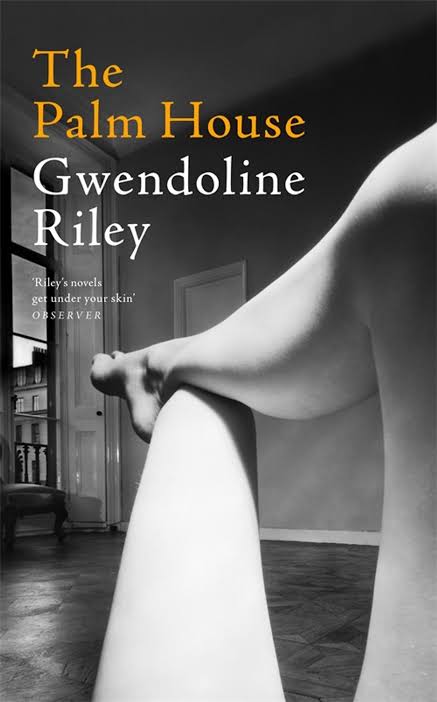 The Palm House is less organized than Riley’s previous novel, My Phantoms (2024), but all the hallmarks of Riley’s style—the compactness, the astringent prose, the unsparing look at family and class dynamics, and the fine ear for dialogue—are there. The Palm House follows three storylines: one about the narrator Laura’s old friend, Putnam, who’s resigned his job as an editor at Sequence (a stand-in for TLS) after its hostile takeover by a philistine named “Shove”; one about Laura’s adolescence, during which she became involved with a predatory comedian named Chris Patrick, seemingly based on Russell Brand; and one about family matters. The intentionally ragged shape feels made for an age of frayed nerves and attention.
Riley’s dialogue is needle-sharp, the description of emotions exact. “Putnam was more than unappeasable,” Laura observes. “He embraced an exhilarated nihilism.” When he is feeling persecuted: “Never mind carrying a cross, it felt at times as if Putnam had decided to wear a coffin.” When he’s melancholic: “It was like someone gently tickling you. Ever so gently. That insistent, cloying ruefulness.” The story, on the other hand, is drifty. Here a bad holiday in Dubrovnik; there a workplace slight; here a complication involving real estate; and everywhere, everywhere, wet weather and cramped interiors.
The standalone section about Chris Patrick is the most memorable. A young Laura waits by the stage door with a girlfriend; they become groupies. Eventually she rides in his car and goes to his flat. “Before Chris Patrick started he went and did something in a cupboard in the corner of the room. He left the cupboard door open and I saw a red LED light. It’s since occurred to me that he was turning on a video camera. At the time, nothing occurred to me. I just registered the light.” Riley’s style here is static, a simple alternation between present knowledge and past naiveté. “He moved me around, and turned my head, as I’ve since realized, so that the camera could record my face. I remember one of the first things he did was to sort of roll his penis over my face. I suppose it was obvious that I didn’t want to get anything wrong. When he moved me I stayed where he put me until he moved me again.” The metaphor she arrives at is devastating. “When he was pulling my hair I tipped my whole head back to stop the hair being torn out. I imagine then, on his recording, I looked something like a frightened horse. The way their eyes go.”
In the end Putnam is restored to his place of honor and Laura takes a housesit while waiting to close escrow on her own flat. The ending here—the acquisition of a flat upon the death of her father, with whom Laura has had strained relations—is deliberately prosaic. The Palm House reads less like a novel than a series of character sketches—of the predatory celebrity; the dapper, fading actor; the deadbeat father; the narcissistic mother; the rebarbative editor staging his comeback. Putnam is the ostensible center of the novel, but his relation to Laura is tangential. Of her friendship with him she remarks: “We’d been passing these thoughts back and forth for years. There was a certain wistfulness we seemed to enjoy.” The same might be said of Riley’s novel.
*
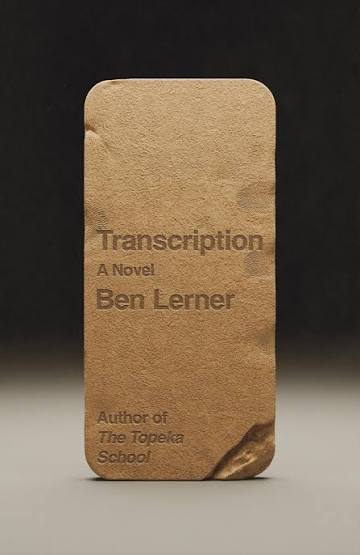 Ben Lerner’s Transcription has a similar wistful, warmed-over quality. It shares the same tripartite structure (The Palm House is technically in five parts but has essentially three storylines). Part one is about Lerner’s journey to Providence, Rhode Island, to visit his mentor “Thomas,” who is modeled on Lerner’s real-life mentor Keith Waldrop, to conduct an interview. “My main concern was that I would somehow fail to record us on my phone, or that I’d manage to delete the voice memos when I tried to send them to the magazine,” the novel begins. After dropping his phone in water, the narrator’s anxieties come to fruition, and he fails to record the interview. Part two is about a celebration of the now-dead Thomas, during which Lerner’s narrator confesses to having faked the interview from memory. For this he is excoriated by a colleague: “You more or less confessed that you falsified a big part of what many of us thought of as his last, I don’t know, testament.” Standing in for the reader, the colleague asks a question that hangs over the book: “And if you were going to invent things, to lie, whatever your fucking excuses, why confess it here, in this way?” Part three consists almost entirely of a monologue delivered by Thomas’s son Max. The monologue has to do in part with his unhappy relationship to his father, but it is primarily about the difficulty of raising his daughter, who has ARFID—avoidant/restrictive food intake disorder. Fatherly anxiety permeates the book.
There’ve been several takedowns of Transcription, most notably by Tara Menon and Adrian Nathan West. The flaws are real. Lerner’s schtick—the lying narrator, the pretentious high theory interludes—gets old. The book’s gambit is that it is a transcription of life, only the author forgot to hit the record button. Consequently, the narration, as West has observed, can be dull, a Hemingwayesque enumeration of banalities. “I looked through my bag for the phone charger and plugged it in and turned on the TV and opened the blinds and half listened to the news as I sat on the bed and stared out the window, which offered a view of the church.”
Mostly, however, Lerner thinks about himself. Just as Adam Gordon of Leaving the Atocha Station is incapable of having “a profound experience of art,” so too is Lerner.
I was typically unmoved by “unspoiled” mountain views; after the glass flowers [at the Harvard Museum of Natural History], I would see cracks in the rock face as penciled, as a history of small decisions, and then experience the view as beautiful. I could will myself to see the rose and pink of a sunset as applied in touches or stains and then revert to seeing it as natural; and so on.
Must something be artificial to be beautiful? Lerner suggests as much; his book is more about “experience” than the thing being experienced. Thomas assesses Lerner’s incuriosity thus: “You tell me nature has no power over you. But that you have a child’s trick to change it, no?”
Thomas dominates the story, pontificating on screens, time, memory, and the sense of constant disaster that characterizes the current century. The dialogue is stilted, but Lerner hits his stride with Thomas’s monologue, which shows him flitting from one thing to the next, mixing people up, accusing his listener of not paying attention. He’s a relic who speaks in antiquated English.
But what I am saying is that radio, it is a recovery. Of the voice without the body. That like everything new, it is also ancient […] But on the radio, you see, it was Hitler’s voice, rising and rising in pitch. And this is my first sound memory […] In my memory his voice rises without end. It’s strange that our brains will allow this—to hear a scale as eternal ascending, an impossible staircase.
Lerner is at his best when observing the ways technology and memory intertwine, and Transcription is no exception.
The final segment, the story of Max’s daughter, is engrossing but perhaps unedifying. Max bemoans his and his wife’s fate: “Two parents, two lawyers, two self-loathing elites, weeping over overpriced salads … because our child, for reasons we couldn’t fathom, would not let nourishment pass her lips, because we’d failed to help our child thrive.” To Max, diagnostic language is a ruse. “‘My daughter won’t eat’ becomes ARFID. … ARFID denotes the same mystery, is just an envelope for ignorance; ARFID just means.” The monologue on millennial parenting works because—except for a few bum notes and florid asides—it sounds real.
So, then: is this transcription, or selective reminiscence? Lerner can’t seem to make up his mind. Transcription, anyway, evokes a morbid mood, and, even if it is willfully prosaic and sometimes opaque, it is highly readable. It’s not as funny as his past books—but then again we’re living in a less funny time. Their novellas may be a bit plotless, but Lerner and Riley don’t lack shock value. The descriptions of a teenage girl being groomed by an older man and of a young girl refusing to take food are disturbing. They come out of nowhere, contextless, in accordance with the authors’ general disbelief in, or exhaustion with, plot.
*
 Nancy Lemann is more committed to traditional plot and suspense, though she too arrives at the same book length and assumes the same diminished attention span. The Oyster Diaries, like The Palm House and Transcription, is divided into three main parts and various subparts, in a bid to hold the reader’s attention. Part one opens with the narrator Del’s “diary of remorse,” with entries such as “failure to act,” “spiritual paralysis,” and “obsession with criticizing in-laws and their religious practices.” Del is mordant and self-deprecating, likable in her professions of unlikability.
Why am I such a dick, is the big question.
But why is my favorite subject how annoying some people are? Like the fire only burns when people are annoying me and when I marvel at their inability to—to what, be like me?
Why am I such an obnoxious anhedonic misanthrope?
“Anhedonia”—the incapacity to feel pleasure—is a running theme. Another is Del’s impatience with “falderal.” There’s a Catholic quality to the book’s confessionalism—not that Del is asking for readerly absolution (a problem with Lerner’s work), but she is constantly interrogating an emotion, seeking out its ulterior motives, conducting an inquisition on herself. As she puts it, “Finding out you’re an idiot is not a totally pleasant experience, but your ability to discern you’re an idiot is a promising sign.” This type of sentence would never appear in Riley’s novel, even though it describes roughly the same thing.
Lemann also made me laugh. For example: “The courthouse in Maryland was filled with giant signs that said DO NOT BRING EXPLOSIVES IN HERE. (OK, I’ll just bring my explosives somewhere else?).” This comes from the book’s first and funniest part, about Del’s mundane life as a clerk in a courthouse in New Orleans. Part two is about putting up with people: two daughters, a husband whom she loves, parents, and Jewish in-laws whom she just manages to tolerate. I won’t give away much more, since there’s a twist. The final section of the book, about Del going on safari with her husband and daughters—who, in a reversal, are the ones putting up with her—returns to the diaristic style of the opening. It’s a messy book; I still enjoyed it.
*
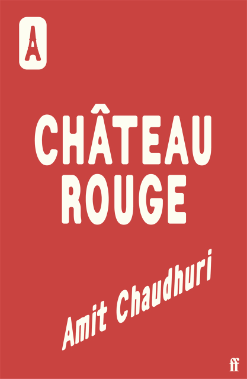 Like the others, Amit Chaudhuri’s new book, Château Rouge, is diaristic, middle-aged, tired. Chaudhuri has written a number of novels so closely keyed to his own life that drawing a distinction between fiction and memoir seems supererogatory. The book is named after a station of the Parisian Métro system east of Montmartre. You probably haven’t been there; there’s no real reason to go. Chaudhuri nonetheless attempts to come to terms with his filthy sublet, until his wife and daughter arrive, at which point they decamp to an Ibis hotel nearby.
Chaudhuri believes the age of the flâneur is over. “You can’t ‘be’ a flaneur any more than you can produce a nineteenth-century novel by deciding to write one.” Château Rouge, as its Métro-inspired title suggests, is an anti-flâneur novel. Weird things happen on the street—a mysterious “dildo-wielding” woman shadows Chaudhuri. The sidewalks are dirty. Fried chicken joints and fast-food restaurants abound. It is the usual backdrop of urban poverty in the global age. Chaudhuri’s book takes inspiration from D. H. Lawrence’s highly entertaining Sea and Sardinia, an irate travelogue in which he travels to Sardinia, fares badly, eats worse, and fights with various Italians. Chaudhuri’s persona is less irascible, but the same story—of taking a bad trip on purpose and sticking it out—is told. Just as Lawrence steered clear of Rome and Naples and went to obscure Sardinian villages instead, so too Chaudhuri stays in the wrong arrondissement, believing the more touristy parts of Paris to be kitsch.
In Paris, the historic landmarks…are on display, meticulously curated; you don’t really “see” them; you pay them obeisance—but the houses the bourgeois left behind are like the Moghul tombs: they have no explanation and there’s no context to their appearance; you don’t genuflect to them because they have no designation.
This obsession with fakery and authenticity runs through Lerner’s work, too. Lerner’s Leaving the Atocha Station is, among other things, about Adam Gordon’s fruitless quest to avoid seeming like what he is: an American abroad. Chaudhuri shares with Lerner a faith in the serendipitous encounter, the inconvenience that leads you off the beaten track. But Château Rouge has an elegiac cast. “You can’t revisit [the past] in a time machine,” writes Chaudhuri. “It must come to you when you’re making ‘a turn around a street corner.’” Sometimes the reencounter works—“You encounter what you remember. It’s in front of you. You’re spellbound by it, notwithstanding your sardonic observations”—but more often it fails.
Chaudhuri reacts by indulging in his own sense of foreignness. He is not all that different from the tourist who takes a selfie in front of Monet’s Water Lilies. At times I found the navel-gazing troubling. Chaudhuri seems to delight in his total lack of French, in the pidgin and mistranslations that characterize his daily encounters. He complains of tourism and globalization and then contributes to tourism and globalization. That may be unavoidable, but there isn’t much introspection about his own complicity.
To Chaudhuri’s credit, however, he shows no aversion to the battered parts of town and attempts to map something like a migrant aesthetic there. In Clignancourt, everyone’s from somewhere else: there are Pakistanis, Bengalis, and Indians, with whom he communicates in a mix of Urdu and Bengali, North Africans, and sub-Saharan Africans. It’s not a white world. Staying on the fringe of Paris grants Chaudhuri access to the fringe of French society—although the real fringe, the great untrammeled ground, are the banlieues that lie beyond the city limits. Château Rouge, after all, is just one stop away from Sacré Cœur Basilica, which Chaudhuri listlessly visits.
Chaudhuri’s book doesn’t bother with parts. Sentences and paragraphs of irregular length are separated by asterisks. Where Riley, Lerner, and Lemann worry over the potentially infinite subdivision of a text into smaller subunits, Chaudhuri takes as given that he is stringing together parts rather than trying to construct a cohesive whole. He may take inspiration from the raga, a musical form he reflects on in the book’s closing pages, and a very loose and accommodating structure.
There are risks to this approach. Sometimes paragraphs of a single sentence of two are given a whole page. The results can be anticlimactic.
We open the window. The air-conditioning isn’t working.
She’s returning to the conference. I’m going to meet Augustin.
He’s put on a bit of weight, and his hair’s gone limp. He’s sweating. We take a selfie.
Other reflections are more resonant. “You can’t know you’re in an adventure or in a historical moment, but you can know that it’s impossible to have that knowledge, and knowing this can free you to encounter history, albeit in a different way from those who think history is to be found in monuments.” Chaudhuri, like Lemann, believes in the moral weight of discovering one’s own idiocy.
Château Rouge ends with the death of Chaudhuri’s father-in-law and a dispute over the funerary rites. The Palm House, Transcription, and The Oyster Diaries, too, end with a father’s (or in Lerner’s case, a father figure’s) death. In these slightly rudderless, post-Covid, attention economy–age books, a parent’s death stands in for the death of a certain narrative logic that was formerly accessible and now, apparently, isn’t. But I’m not convinced a novel has to be 150 to 200 pages, that other forms of attention and storytelling are unavailable to us. One can’t sit down and write a long character-driven novel, according to Chaudhuri, and so he doesn’t. Some people do though. Sigrid Nunez makes similar claims in her work, as does Lerner, as does Rachel Cusk—all observers of the beige bland life that globalization has wrought. There are ways to be interested in the world, even a world cluttered with Lyca Mobile stores and McDonalds. They just might not be 150 to 200 pages in length.
What is missing from these books is the immersion one can only find in a longer work. But, if they assume the readers’ deficit of attention, they do not do much to alleviate it; they jump around, desultorily, from one thing to the next, and insert asterisks and numbers. But a bare minimum of plot would be much more effective than all these tricks of formatting. I was left wanting something plotty, something propulsive—something, perhaps, a bit less self-involved. The maxim “Write what you know” has been so thoroughly assimilated by authors of literary fiction that it’s become a given. This limitation has yielded memorable, often controversial, works of autobiographical fiction such as Karl Ove Knausgård’s My Struggle and Sheila Heti’s books. But I wish these authors would write what they don’t know, or don’t yet know. Introspection and clinical observation are not the only ways of arriving at knowledge; plot can be another way of connecting the dots, as authors like Ali Smith have proven. Literary fiction is on the brink of relinquishing plot to genre fiction and to book-series, and I shudder to see it cede more ground than it already has. Plots exist for a reason. I like all of these authors; I’d like their newest books better if they decided to be a bit more ploddingly plotty.
Published on September 6, 2026